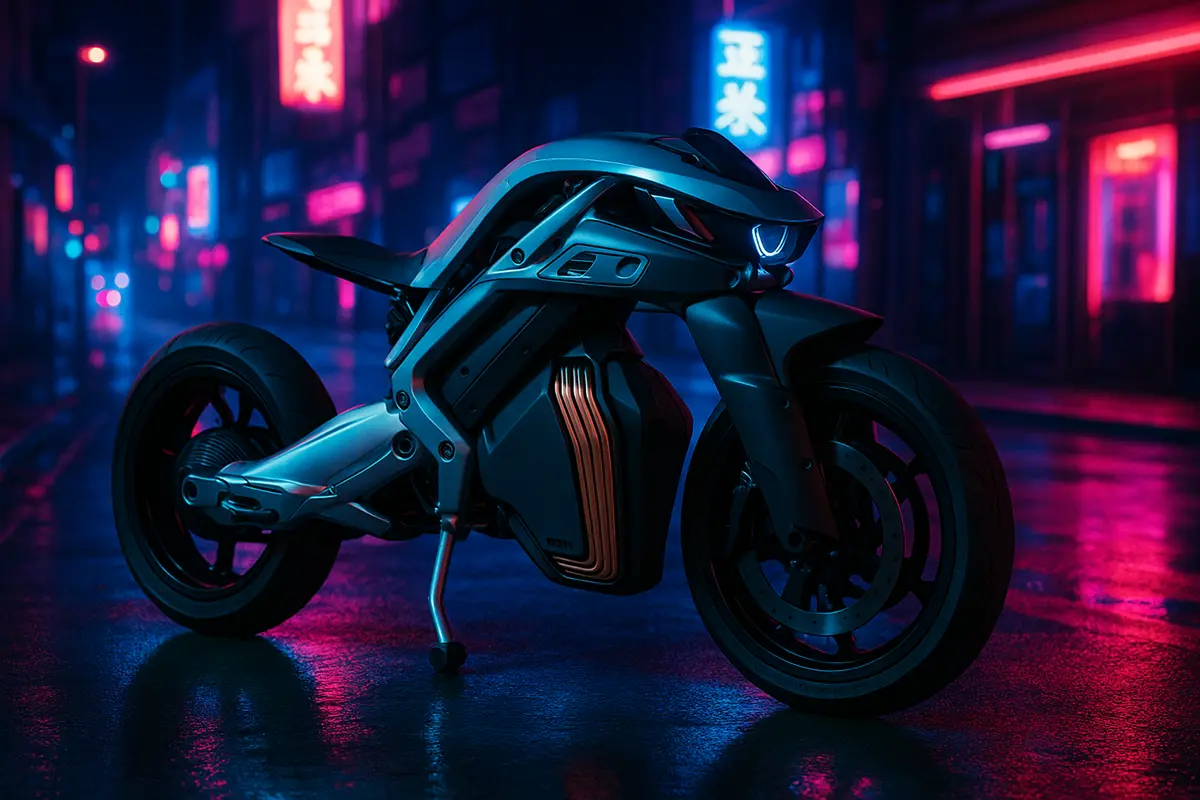

The Yamaha MOTOROiD 2 is not just a motorcycle. It’s a self-balancing electric motorcycle that stands on its own, recognizes your face, responds to your gestures, and follows you like a loyal companion. When you first hear about it, your mind struggles to catch up with what Yamaha has created.
For decades, motorcycles remained largely unchanged in their core concept. A rider needed skill, balance, and constant attention. Then, in 2017, Yamaha showed the world something different. Now, with the MOTOROiD 2, they have perfected the vision. This electric motorcycle represents the future of two-wheel mobility, where safety and connection matter just as much as speed.
The journey from traditional fuel-powered bikes to this AI-driven, self-balancing machine tells a story of battery evolution, sensor technology, and a bold rethinking of what motorcycles can be. Electric drivetrains now offer precise control that petrol engines simply cannot match. The silence of an electric motor replaces the traditional rumble, creating an almost meditative riding experience.
What makes the Yamaha MOTOROiD 2 truly special is its purpose. Yamaha calls it exploring “Jin-Ki Kanno,” the blissful sensation of being one with your machine. But with the MOTOROiD 2, the machine becomes your partner, learning your moves and protecting you through technology.
Self-Balancing and Autonomous Movement: Technology That Feels Alive
Imagine a motorcycle that never falls over. Imagine it standing perfectly upright in your garage, waiting for you, needing no kickstand. The Yamaha MOTOROiD 2 makes this real through its innovative Active Mass Center Control System, or AMCES.

At the heart of this system lies a simple but brilliant idea. The battery, which is normally the heaviest part of any electric bike, becomes the solution. Yamaha positioned this massive battery beneath the bike’s seat, where it acts as a moving counterweight. When the bike leans, the battery shifts automatically to maintain perfect balance.
The rear swingarm on the MOTOROiD 2 has a unique pivot point that allows the entire rear section to move independently from the front. This creates a dance-like quality to how the bike stays upright. It’s not fighting gravity with brute electronic force. Instead, it flows with it, making micro-adjustments that feel natural and organic.
Without a rider, the Yamaha MOTOROiD 2 can move forward, park itself, and maintain perfect balance. When you approach, it recognizes you and follows you slowly, like a pet that has been waiting all day for its owner to come home. When it needs to stop, a large center stand automatically drops down. As soon as you command it to move again, the stand lifts automatically.
This self-balancing capability has one critical benefit that matters more than anything else on paper: safety. A bike that cannot tip over in most riding situations is a bike that eliminates one of the biggest fears riders face. For beginners, elderly riders, or anyone anxious about balance, this technology is life-changing.
AI-Powered Interaction: Your Motorcycle Knows You
The MOTOROiD 2 uses advanced image recognition AI that learns to identify its owner. This is not about gimmicks. It is about creating a personal relationship between rider and machine.
When you approach the bike, cameras mounted on the frame scan your face and body. Within moments, the motorcycle recognizes you and springs to life. The blue mood lighting along its translucent bodywork brightens, welcoming you like a friend. This AI system doesn’t just recognize anyone. It remembers you, learns your preferences, and adapts to your riding style over time.
The machine develops a symbiotic relationship with its rider. It learns when you prefer smooth acceleration or aggressive throttle response. It remembers your favorite routes and charging habits. Over months of use, your Yamaha MOTOROiD 2 becomes uniquely yours, as familiar to you as your own reflexes.
This personalization goes beyond comfort. The AI analyzes how you ride, the roads you take, and your skill level. It then adjusts stability control, regenerative braking intensity, and motor response to match your needs. A nervous new rider gets a protective system that intervenes more often. An experienced enthusiast gets a machine that trusts their inputs and responds more freely.
The emotional connection this creates is profound. Your motorcycle isn’t just a vehicle you operate. It is a partner that anticipates your needs and moves with your intentions.
Gesture and Voice Recognition: Control Without Touching
Traditional motorcycles have handlebars, throttles, and physical controls. The Yamaha MOTOROiD 2 replaces all of this with something far more intuitive. Your voice and your hand movements become the controls.

You can command the motorcycle through simple voice instructions. Want it to start? Just speak. Need it to follow you to the parking spot? Hand gesture does it. This might sound like science fiction, but the sensors and AI make it real. The bike listens and watches, understanding context and intent.
The hand grip area, which replaces traditional handlebars, includes what Yamaha calls the LEAF system. This touch-responsive element allows riders to communicate with the bike through tactile inputs. Press once for acceleration. Press differently for braking. The bike responds to the nuance of your touch.
Facial expression recognition adds another layer. If you look nervous, the bike’s stability systems tighten. If you seem confident and experienced, it gives you more freedom. The motorcycle reads your face and adjusts its behavior to protect you or empower you, depending on what it senses.
This removes barriers between thought and action. You don’t need to remember where the brake lever is or how hard to twist the throttle. You just move and speak naturally, and the machine understands. For riders with limited mobility or those learning to ride, this is revolutionary.
Performance and Motor Capability: Silent Power That Responds Instantly
The Yamaha MOTOROiD 2 uses electric hub motors integrated directly into the wheels. Unlike traditional motorcycles with centralized engines, these hub motors deliver power exactly where it is needed, with zero delay.



Electric motors produce maximum torque instantly from a standstill. There is no waiting for revs to build, no gear shifting, no engine warm-up. The moment you command acceleration, the MOTOROiD 2 responds with smooth, linear power delivery. This makes low-speed riding incredibly manageable, which is critical for a self-balancing bike that must navigate parking lots and crowded streets.
While Yamaha has not published official power figures for the concept model, the electric architecture suggests substantial capability. Hub motors in similar electric motorcycles typically deliver 25 to 50 kilowatts of power, with torque figures that rival or exceed 125cc petrol bikes.
The regenerative braking system captures energy every time you slow down. When you brake, instead of wasting that energy as heat, the motor reverses and feeds electricity back into the battery. This extends range significantly and reduces wear on physical brake pads. On city commutes with frequent stops, regenerative braking can extend your range by 20 to 30 percent.
Thermal management is sophisticated but invisible. The hub motors and battery both generate heat during use. Yamaha’s cooling systems keep temperatures in the ideal zone, maintaining performance consistency whether you are riding in cold mountain passes or hot urban traffic. The battery slides within its housing, which also helps distribute thermal load evenly.
Throttle response calibrates automatically based on riding mode and your riding history. In gentle mode, acceleration is smooth and gradual. In sport mode, the motor unleashes its full character. The bike’s AI adjusts throttle mapping in real-time based on traction conditions, your riding style, and road surface.


Handling at low speeds is where the Yamaha MOTOROiD 2 truly excels. The self-balancing system means you can stop and hold the bike upright at traffic lights without putting a foot down. The independent rear swingarm provides suspension compliance that smooths out potholes and street imperfections. Combined with the low center of gravity from the underslung battery, the MOTOROiD 2 feels planted and stable even in stop-and-go traffic.
Adaptive Design: Form That Follows Function
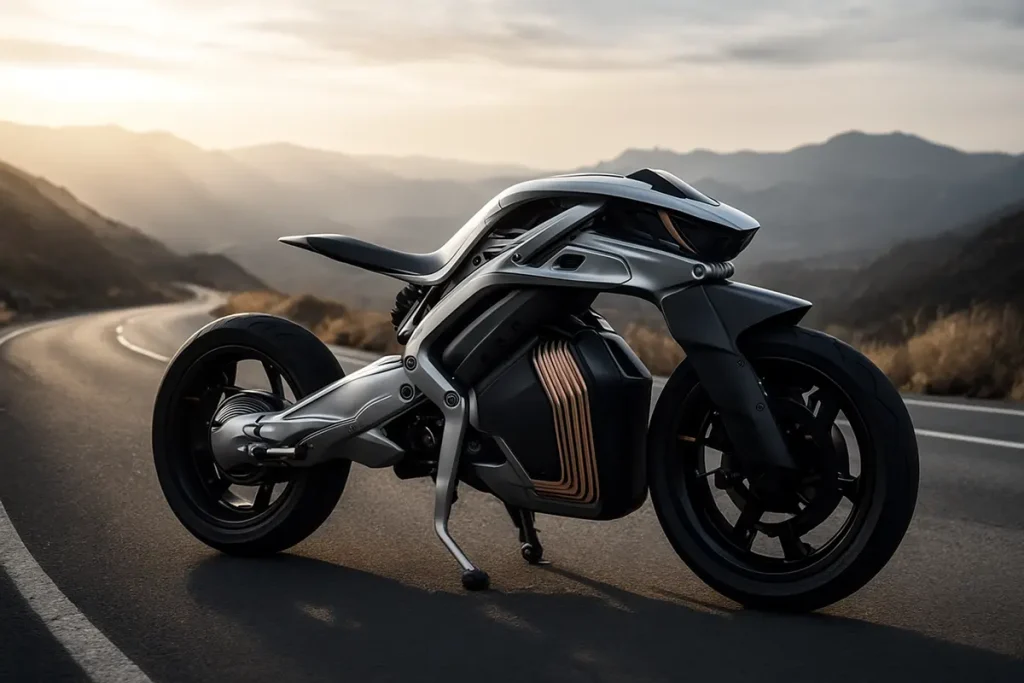
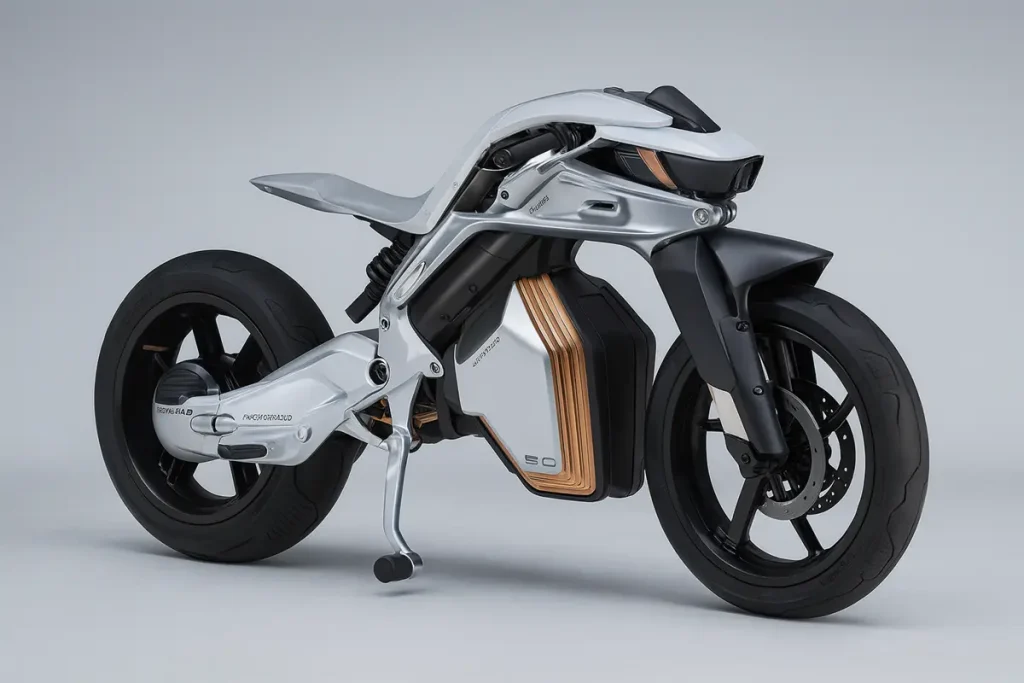
The Yamaha MOTOROiD 2 looks like nothing else on the road, and that is entirely intentional. Every curve, every material, every color was chosen to reflect what this bike does and how it makes you feel.
The translucent white bodywork is not just for show. You can see the mechanical components underneath, creating transparency that suggests the bike has nothing to hide. It is an honest design that celebrates its technology rather than concealing it. The blue mood lighting runs along the body in patterns that communicate the bike’s status and mood, another layer of non-verbal communication between you and your machine.
The riding posture is upright and relaxed. You are not cramped forward like on a sports bike, nor are you sprawled back like on a cruiser. Instead, you sit naturally with good visibility of the road ahead. The seat is positioned low and wide, offering support without restricting movement. Legroom is generous, even for taller riders, and foot pegs position naturally beneath your hips.
Seat comfort is crucial on any motorcycle, and the Yamaha MOTOROiD 2 delivers. The material uses memory foam technology that molds to your body shape, distributing weight evenly and reducing fatigue on longer rides. The rear portion includes subtle contouring that supports your lower back without the aggressive gripping of traditional bikes.

Storage is practical but minimal, befitting a concept bike. There is space beneath the seat for a helmet, gloves, or personal items. The translucent sections mean you can see what is stored inside, and the design keeps the visual clean.
Build quality reflects Yamaha’s attention to detail. The chassis uses lightweight aluminum that resists corrosion. The hub wheels are forged aluminum with integrated motor components, reducing unsprung weight and improving responsiveness. Every bolt and connector is stainless steel or anodized, designed to last decades without degradation. This bike is built to be an heirloom, not a disposable commuter.
Features and Technology: More Than Just Gadgets
The independent rear swingarm does more than improve stability. Its pivoting design allows the rear wheel to lean independently from the frame, almost like the bike is dancing. This reduces the lean angle needed in corners, decreasing the feeling of instability that many riders fear. You can take a corner with less fear because the bike is already partially leaned for you.
Riding modes adapt to your environment and skill level. City mode prioritizes smooth acceleration, tight turning radius, and maximum regenerative braking for frequent stops. Sport mode unleashes more power and allows sharper throttle response, though stability systems remain active. Eco mode optimizes for maximum range, moderating power and extending your distance per charge.
Regenerative braking is selectable through the touch controls. Want aggressive regenerative braking that feels like engine braking? Select it. Prefer it softer so you feel closer to a traditional bike? Adjust it. The system learns your preference and applies it automatically.



Smart connectivity means the Yamaha MOTOROiD 2 pairs with your phone via Bluetooth. The companion app shows your battery level, estimated range, and riding statistics. You can check your bike’s status from inside a store or office, knowing exactly when to head back to charge. GPS tracking is built in, giving you turn-by-turn navigation on the digital console.
The digital console is minimal but comprehensive. Instead of analog gauges, a sleek digital display shows speed, battery percentage, range remaining, and riding mode. The display adjusts brightness automatically based on ambient light, so it is readable in bright daylight or dark evenings. Graphics are clean and uncluttered, avoiding information overload.
Battery analytics are detailed without being overwhelming. You see your current charge level, estimated range, remaining charge time at current consumption, and predictions for your planned trip. If you are not going to make it to your destination on current battery, the system recommends charging stops or alternative routes.
Security features go beyond a simple key. Biometric authentication means only you can start the bike, even if someone steals the keys. GPS tracking means if the bike is moved without authorization, you are notified instantly. An alarm system sounds if someone approaches while you are away.
Lighting technology is advanced and adaptive. The headlight uses LED arrays that brighten or dim based on ambient conditions and time of day, ensuring you see without blinding oncoming traffic. Brake lights pulse intelligently, with different intensities depending on how hard you are braking, making your intentions clear to drivers behind you. Turn signals pulse in rhythm with the bike’s overall lighting theme, creating a visual language that is uniquely Yamaha MOTOROiD 2.


Specifications Table: The Raw Numbers
| Specification | Details |
|---|---|
| Motor Type | Hub-mounted electric motors |
| Peak Power Output | Estimated 25 to 50 kilowatts (33 to 67 horsepower) |
| Maximum Torque | Estimated 60 to 100 newton-meters (instant delivery) |
| Battery Type | Lithium-ion chemistry (proprietary configuration) |
| Battery Capacity | Estimated 10 to 15 kilowatt-hours (specs not disclosed) |
| Claimed Range | Not officially specified |
| Real-World Range | Estimated 150 to 200 kilometers per charge |
| Charging Time (Standard) | Estimated 6 to 8 hours |
| Charging Time (Fast Charge) | Estimated 1 to 2 hours (with DC fast charging) |
| Weight | Estimated 200 to 250 kilograms (due to battery and structural components) |
| Brakes | Regenerative braking plus mechanical disc brakes |
| Tires | Custom Yamaha design, optimized for self-balancing system |
| Dimensions | Approximately 2100 mm long, 750 mm wide, 1200 mm tall |
| Load Capacity | Estimated 250 kilograms total system capacity |
| Controller Type | AI-enabled ECU with real-time sensor fusion |
| Motor Cooling | Liquid cooling system |
| Frame Cooling | Passive cooling through metallic frame design |
| Self-Balancing System | Active Mass Center Control (AMCES) |
| Fuel Type | Electricity |
| Emissions | Zero tailpipe emissions |
Pricing and Market Status: When Will You Actually Ride One?
Here is the honest truth: the Yamaha MOTOROiD 2 is currently a concept bike. Yamaha is not taking pre-orders. You cannot walk into a dealership tomorrow and buy one. This is a research and development project showcased at the Japan Mobility Show to explore what motorcycles might become.
Yamaha has not announced an official price, a confirmed launch date, or even a target market. For comparison, Yamaha’s production electric motorcycles like the Ninja e-1 start around 7,600 USD, while the Z e-1 sits at 7,300 USD. If and when the Yamaha MOTOROiD 2 moves from concept to reality, the price will likely be significantly higher, probably in the 12,000 to 20,000 USD range, given its advanced technology.
The technology is real, though. Yamaha is not showing empty promises. The self-balancing system works. The AI recognition is proven. The electric powertrain is production-ready. What remains is engineering the design for mass production, ensuring safety compliance across different countries, and making the price accessible to regular riders.
Yamaha’s strategy appears to be testing these technologies in concept form first, gathering feedback, and refining the design before making production commitments. Similar electric motorcycles are already available in markets like Japan and India, so infrastructure is being built. As battery costs continue to fall, the Yamaha MOTOROiD 2 or a production variant inspired by it will likely become more affordable.
Current demand is extremely high among enthusiasts and tech-forward riders. Online forums overflow with speculation about pricing and availability. Yamaha’s commitment to the project is clear, as they have continued developing it since 2017, moving from the original MOTOROiD concept to this refined second generation.
For riders in India, Japan, and globally, the Yamaha MOTOROiD 2 signals that Yamaha is serious about the electric motorcycle future. Regional versions are likely once production begins. The Indian market, in particular, has shown strong appetite for affordable electric two-wheelers, making it a likely launch market.
Conclusion: Is the Yamaha MOTOROiD 2 Worth Your Attention?
The Yamaha MOTOROiD 2 represents something rare in the motorcycle world: genuine innovation that goes beyond adding gadgets to an old formula. This is not just an electric motorcycle. It is a rethinking of what a motorcycle can be.
Should you buy one when it becomes available? That depends on what you value in a motorcycle. If you care about traditional riding feel, raw engine sound, and manual control, the Yamaha MOTOROiD 2 is not for you. But if you are excited by technology, fascinated by safety innovations, and open to a new kind of riding partnership, this bike deserves serious consideration.
The self-balancing system addresses one of motorcycling’s biggest challenges: the fear of tipping. The AI recognition creates an emotional bond that makes riding feel less like operating a machine and more like partnering with a living companion. The electric powertrain delivers smooth, responsive performance without the noise and maintenance of petrol engines.
For young, global riders in particular, the Yamaha MOTOROiD 2 represents the future. It is exciting, it is safe, and it is sustainable. It feels like the natural evolution of two-wheel mobility.
Yamaha has created something that works on multiple levels. As a technological achievement, it is impressive. As a statement about where motorcycles are headed, it is bold. As an emotional experience, it is genuinely moving to see a machine that cares for you as much as you care for it.
The question is not whether the Yamaha MOTOROiD 2 is good. It is whether you are ready for what this motorcycle represents.
FAQs: Your Questions Answered
Does the Yamaha MOTOROiD 2 fall over if the battery dies?
The self-balancing system is powered by the main battery, so theoretically, a completely dead battery would compromise balance. However, Yamaha’s engineering includes redundant power sources and the bike’s stability logic is designed to fail gracefully, meaning it would gradually lower itself rather than tip suddenly.
Can you actually ride the Yamaha MOTOROiD 2 with your hands off the handlebars?
Not yet. The concept proves gesture control is possible, but current production-ready systems still require some rider input for legal and safety reasons. Future iterations may move closer to fully autonomous control on certain road types.
How much faster does regenerative braking charge the battery compared to normal charging?
Regenerative braking cannot fully charge a dead battery quickly. It extends range by 20 to 30 percent on city rides with frequent stops. For serious charging, you will always need to plug in to a charger, whether standard or DC fast charging.
Is the MOTOROiD 2 safer than a regular motorcycle because of the self-balancing system?
Yes and no. The self-balancing prevents low-speed tip-overs, which is genuinely safer. However, high-speed accidents are not prevented. The real safety advantage comes from the comprehensive sensor suite and stability control systems that help prevent accidents before they start.
When can I buy the Yamaha MOTOROiD 2?
Yamaha has not announced a production date or official launch timeline. The bike is currently a concept vehicle for research and development. If history is any guide, production versions might appear in 5 to 10 years, though this is pure speculation based on typical motorcycle development cycles.